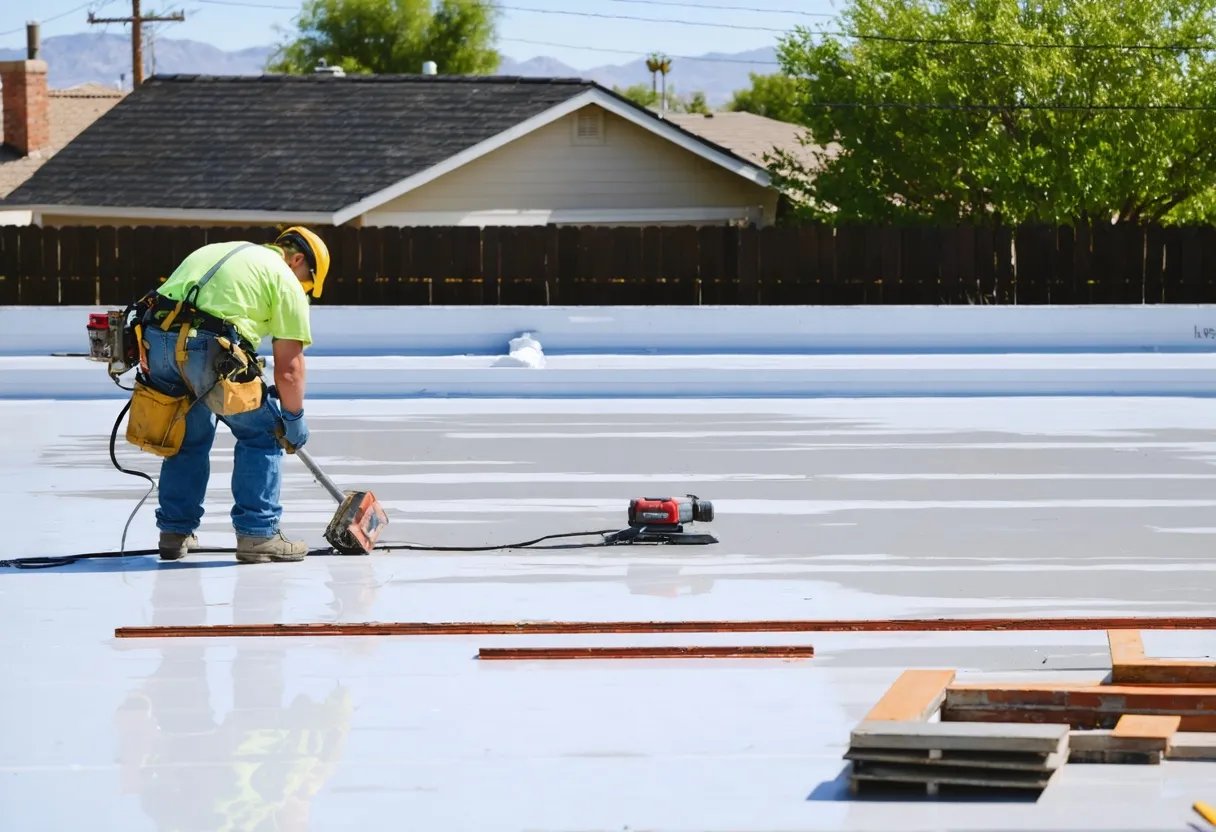
Flat and foam roofs fail differently than shingle roofs — and in Glendale, they fail on a schedule set by the Arizona sun, not by age alone. UV exposure breaks down coatings, ponding water finds the smallest seam, and a roof that looked fine in March can be blistering or leaking by August. If you're searching for flat roof repair in Glendale, AZ, or you've got a foam roof that's starting to show granulation, soft spots, or bubbling, this page walks through exactly what repair involves, what it costs, and how to tell a real fix from a temporary patch.
We specialize in low-slope systems — built-up roofing, modified bitumen, single-ply membranes, and especially spray polyurethane foam (SPF) roofing — alongside tile and shingle repair for the rest of the house. Every estimate is upfront and written, and we offer financing for homeowners who'd rather not pay for a full roof out of pocket.
Flat and Foam Roof Repair: What's Actually Involved
"Flat roof repair" covers a wide range of work, and the right fix depends entirely on what's underneath the surface. A few of the most common issues we address:
- Ponding water: Flat roofs aren't perfectly flat — they're supposed to have a slight slope (typically a quarter-inch per foot) to drain. When that slope is compromised by settling, poor original installation, or added rooftop equipment, water sits for days after a storm and slowly breaks down the membrane or coating.
- Membrane splits and seam failure: Modified bitumen and single-ply membranes expand and contract with temperature swings throughout the day. Over years, seams that were torched or glued during installation can separate, especially at parapet walls and roof penetrations.
- Foam blistering and cracking: Spray foam roofs develop blisters when moisture gets trapped beneath the foam or the coating wears thin. Left alone, blisters crack open and expose the foam core to water intrusion.
- Coating breakdown: The elastomeric or silicone topcoat on a foam roof is the sacrificial layer protecting the foam underneath. Once it chalks, thins, or peels, UV light starts degrading the foam directly.
- Flashing failures: Around HVAC units, vent stacks, skylights, and roof edges, flashing is usually the first thing to fail — it's a smaller repair than a full membrane replacement but it's the source of a huge share of the leaks we get called out for.
We diagnose before we quote. That means a physical inspection of the deck, membrane, and drainage — not a guess based on a phone description.
Spray Foam Roofing in Arizona's Climate
Spray foam roofing has become one of the most requested systems in the Valley, and for good reason: applied correctly, SPF is seamless, self-flashing around penetrations, and adds real insulation value on top of the roof deck instead of just under it. That matters here — a well-installed and well-maintained foam roof can meaningfully reduce the cooling load on a home or commercial building through the hottest months of the year.
But foam roofing is also the system most dependent on ongoing maintenance in a desert climate. Arizona's combination of intense UV exposure, long dry stretches, and sudden monsoon downpours is hard on any roofing coating. The elastomeric topcoat that protects the foam wears down faster here than it would in a milder climate, and once that coating is compromised, the foam beneath it degrades quickly. This is why foam roof maintenance in Arizona isn't optional — it's the difference between a foam roof lasting decades and one needing premature replacement.
A flat roof recoat is usually the most cost-effective way to extend the life of an existing foam or modified bitumen roof. Instead of tearing off and replacing the whole system, we clean the surface, repair any damaged foam or membrane sections, and apply a fresh elastomeric or silicone coating. Done on the right cycle — typically every several years depending on coating type and sun exposure — a recoat resets the clock on UV protection without the cost of a full system replacement.
Signs Your Foam Roof Needs Attention
- Chalky white residue on your hands after touching the roof surface (coating breakdown)
- Visible cracks or a spongy feel when walked on
- Discoloration or dark streaking, which often indicates trapped moisture
- Rising energy bills without an obvious cause
- Water stains on interior ceilings, especially after monsoon storms
Tile Roof Repair
Tile is common throughout Glendale and the surrounding Northwest Phoenix metro area, and it's a durable system — but the tiles themselves aren't usually what fail. The underlayment beneath the tile is. Arizona's heat-cycling, where a roof surface bakes all day and cools rapidly overnight, gradually breaks down felt or synthetic underlayment over years, even while the tiles above look perfect. When we get called for a tile roof leak, the repair almost always involves carefully lifting and resetting tiles to access and replace the underlayment beneath, not just caulking a cracked tile and calling it done. We also repair cracked, slipped, and broken tiles individually, matching profile and color as closely as possible so patch repairs don't stand out.
Shingle Roof Repair
For asphalt shingle roofs, the most common Glendale-area repairs involve wind-lifted or missing shingles after monsoon storms, granule loss from UV exposure, and flashing failures around chimneys and vents. We repair sections rather than defaulting to full replacement whenever the rest of the roof has useful life left, and we match shingle color and profile as closely as the existing product allows.
Emergency Roof Repair
Monsoon season brings sudden, severe storms to the Valley, and a leak that starts during a downpour doesn't wait for a convenient appointment. We provide emergency roof repair for active leaks, storm damage, and wind-lifted membrane or tile — the goal on an emergency call is to stop water intrusion and stabilize the roof, then schedule the permanent repair once the immediate threat is handled. If you've got water actively coming into your home, call first and we'll walk you through what to do while help is on the way.
How the Repair Process Works
- Inspection and diagnosis. We get on the roof (not just the ground) to identify the actual source of a leak or failure, which is often not where the water stain shows up inside.
- Written estimate. You get a clear, itemized quote before any work starts — no verbal ballparks that turn into surprise invoices.
- Repair. Depending on the system, this might mean cutting out and replacing a section of membrane, resetting tiles and underlayment, patching and recoating a foam roof, or replacing shingles and flashing.
- Cleanup and walkthrough. We clear debris and walk you through what was done, including photos of the repair area.
- Follow-up. For coating and foam work especially, we recommend a follow-up inspection on a set schedule to catch small issues before they become leaks.
What Drives the Cost of Flat and Foam Roof Repair
No two flat roof repairs cost the same, and anyone who quotes a number without inspecting the roof first is guessing. The real cost drivers are:
- Extent of the damage: A localized flashing repair costs far less than a section of failed membrane or a large blistered area of foam.
- Roof accessibility: Roof height, pitch, and obstructions (HVAC equipment, solar panels, parapet walls) affect labor time.
- System type: Foam, modified bitumen, single-ply, tile, and shingle each require different materials and labor approaches.
- Underlying deck condition: If water has been getting in for a while, the deck itself may need repair before any new roofing material goes down — this is common on older leaks that went unnoticed.
- Repair vs. recoat vs. replace: A targeted repair is cheapest short-term; a full recoat extends system life at a moderate cost; full replacement is the largest investment but resets everything.
We always explain which category your roof falls into and why, rather than upselling a full replacement when a repair or recoat will genuinely do the job.
Insulation and Underlayment
What's under the visible roofing surface matters as much as the surface itself. On flat and foam systems, the foam itself often serves as both waterproofing and insulation, which is why proper thickness and coating maintenance directly affect a home's cooling performance. On tile and shingle roofs, the underlayment is the actual waterproof barrier — the tiles or shingles above it are largely there to shed water and protect the underlayment from UV and physical damage. When we open up a roof for repair, we inspect the underlayment condition and flag it if it's nearing the end of its useful life, even if that wasn't the reason for the original service call.
Roof Inspections
A roof inspection is the starting point for almost everything on this page — you can't get an accurate repair quote, a warranty claim, or an insurance claim documented properly without one. Our inspections cover the membrane or roofing material, all flashing points, drainage, penetrations, and (where accessible) the attic or interior ceiling for signs of past moisture intrusion. We provide a written summary of findings, not just a verbal "looks fine."
Warranties
Repairs and recoats are backed by a workmanship warranty, and manufacturer material warranties apply where applicable coatings, membranes, or roofing products are used. We'll tell you exactly what's covered and for how long before work begins — ask for the specifics in writing as part of your estimate, since warranty terms vary by system type and scope of work.
Licensing, Credentials, and Insurance
We are a licensed, bonded, and insured Arizona roofing contractor. Ask to see our Arizona Registrar of Contractors (ROC) license number and current insurance certificate before any work begins — a reputable contractor will provide both without hesitation. If a roofer won't show you a license number or proof of insurance, that's a reason to walk away, regardless of price.
Get Your Upfront Quote
No pressure, no guesswork — just a clear price for your roof.
Ready for a Roof Built for Arizona?
Reach out for a straightforward, upfront quote.