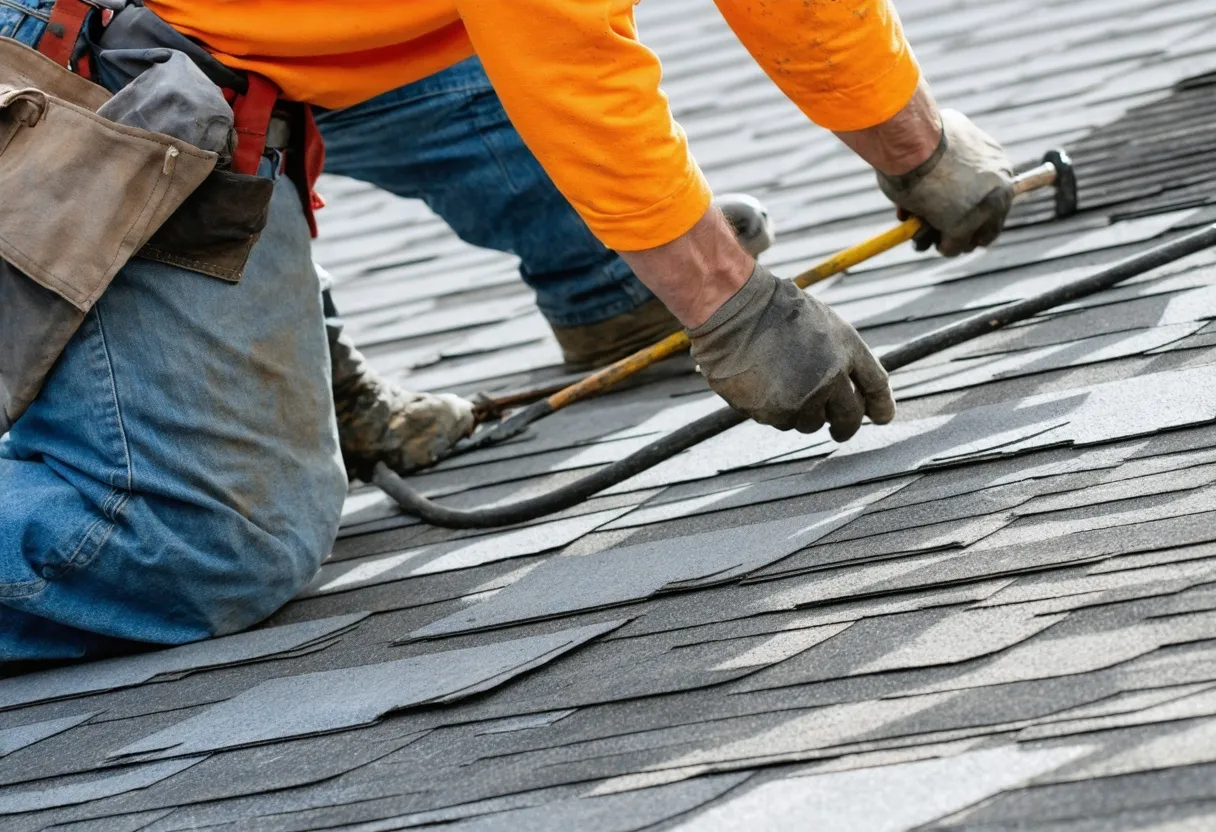
If you're searching for roofing cost in Glendale, AZ, you've probably already noticed the problem: most contractor sites either bury pricing behind a "contact us" form or throw out a number that has nothing to do with your actual roof. Glendale roofs aren't generic. A tile roof near State Farm Stadium handles heat-cycle stress differently than a foam-coated flat roof in a 1970s ranch a few blocks away, and monsoon hail damage doesn't price out the same as ordinary wear. This page walks through what actually drives roofing cost in this market, how tile, shingle, and flat/foam repairs differ in price and process, and how our financing and quoting process works — with no numbers buried in the navigation.
Why Roofing Cost Is Different in Glendale and the Arizona Valley
Arizona roofing pricing isn't just a national average with a desert discount. Two forces specific to this climate shape almost every estimate we write:
- Heat-cycle stress. Roofing materials in the Valley expand and contract every single day as surface temperatures swing from cool desert mornings to well over 150°F on the roof deck by afternoon. Over years, this cycle is what cracks tile underlayment, dries out shingle adhesive, and opens seams in foam roofing — long before the materials would fail in a milder climate.
- Monsoon and hail exposure. Summer monsoon storms bring wind-driven rain and, in some seasons, hail that can crack tiles, bruise shingles, and puncture foam roofing in a single afternoon. Damage from these events is often more urgent and more localized than routine wear, which changes both the scope of repair and how insurance claims get handled.
Because of this, an accurate roofing estimate in Glendale has to account for material behavior under Arizona heat and storm exposure, not just square footage. Any quote that skips this is guessing.
What Actually Affects Your Roof Replacement Cost
Every full roof replacement estimate is built from the same core variables. Understanding them helps you evaluate any quote you receive, including ours:
- Roof size and pitch. Total square footage sets the baseline, but steep or complex rooflines take longer to work safely and require more material waste, which raises labor cost.
- Material choice. Asphalt shingle, concrete or clay tile, and flat foam/spray polyurethane systems all have different material costs, different labor requirements, and different lifespans in Arizona heat — tile and foam generally involve more specialized labor than shingle.
- Number of existing layers and tear-off scope. A roof with one layer to remove costs less to strip than one with multiple layers of old material, and disposal fees scale with what comes off.
- Decking condition. Once old roofing is removed, we sometimes find water-damaged or rotted plywood decking underneath. Replacing bad decking is priced separately from the roofing system itself because it can't be estimated accurately without seeing under the surface.
- Underlayment and insulation upgrades. Heat-rated underlayment and improved attic insulation cost more upfront but reduce energy bills and extend roof life in Arizona's climate — see the section below for how this factors into pricing.
- Accessibility and safety requirements. Steep pitches, multi-story homes, and tight lot access all add labor time.
- Permits and code requirements. Glendale and Maricopa County permitting adds a line item to most full replacements.
- Storm damage scope. If the job originates from monsoon or hail damage, the extent of cracked tiles, bruised shingles, or punctured foam determines whether it's a targeted repair or a full section replacement.
Because these variables interact — a steep tile roof with storm damage and bad decking is a very different job than a simple shingle recoat — we don't publish a flat menu price. What we do instead is put every cost driver on the table during your on-site inspection, in writing, before any work starts. If you want to see full replacement scope and options in more depth, our roof replacement guide for Glendale homeowners breaks down the process material by material.
Cost Per Square Foot: How Arizona Roofers Actually Price the Job
"Cost per square foot" is the shorthand most homeowners search for, but it's a moving target, not a fixed rate. Per-square-foot pricing on any given roof depends on the material tier, the pitch, tear-off complexity, and current material and labor market conditions — all of which change the number enough that a generic figure quoted online is rarely accurate for your specific roof. What's consistent is the relative order: asphalt shingle systems are typically the least labor-intensive to install and sit at the lower end of the cost spectrum; concrete and clay tile involve heavier materials, specialized handling to avoid breakage, and more time on the roof, which puts them at the higher end; flat and foam roofing pricing depends heavily on whether the job is a recoat of an existing foam system or a full tear-off and reapplication.
Rather than quote a per-square-foot number that may not reflect your roof's pitch, access, or damage, we measure and inspect first and provide an itemized, written estimate broken out by material, labor, tear-off, and any decking or underlayment work — so you can see exactly what you're paying for and why, before you commit.
Roof Repair Price Factors by Roof Type in Glendale
Repair pricing follows a different logic than full replacement, and it varies significantly by roof type:
Tile Roof Repair
Tile repair cost depends on how many tiles are cracked or broken, whether the underlayment beneath the tile has also failed, and how accessible the damaged area is. Because tile is heavy, breaks easily if walked on incorrectly, and often needs matching to existing color and profile, tile repair generally requires more specialized labor than shingle repair of a similar size. Heat-cycle wear is a common culprit even when tiles look intact from the ground — the underlayment underneath can be brittle and failing years before visible tile damage shows up, which is why we check underlayment condition during every tile inspection, not just the tiles themselves.
Shingle Roof Repair
Shingle repair pricing scales with the number of shingles affected, whether flashing around vents, chimneys, or valleys is also compromised, and whether the underlying decking took on water damage. Arizona sun accelerates shingle granule loss and seals drying out faster than in milder climates, so a shingle roof that looks fine from the street can still have brittle, wind-vulnerable shingles that crack during monsoon gusts.
Flat and Foam Roof Repair
Flat and spray polyurethane foam (SPF) roofing repair cost depends on whether the fix is a localized patch and recoat or a larger section requiring foam removal and reapplication. Ponding water, UV degradation of the top coat, and monsoon debris punctures are the most common causes of flat roof failure we see in this market. Foam roofs generally need a fresh protective coating on a multi-year cycle regardless of damage, which is worth budgeting for separately from repair costs.
Emergency Roof Repair: Monsoon and Hail Response
When a monsoon cell or hailstorm moves through the Northwest Phoenix metro area, roof damage doesn't wait for a convenient appointment. Active leaks, torn-off shingles, cracked tiles, and punctured foam roofing all need a fast, competent response to prevent water intrusion from turning into interior damage, mold, or structural issues. Our emergency response process prioritizes stopping active water intrusion first — with temporary tarping or sealing if needed — then scheduling a full inspection and permanent repair once the storm has passed and it's safe to assess the full scope of damage.
If your roof was damaged in a storm, document what you can safely see from the ground with photos and note the date and time of the storm — this matters for the insurance section below.
Roof Inspection: What We Actually Check
Every estimate starts with a physical inspection, not a drive-by guess. Our inspection covers the roofing surface itself (tile, shingle, or foam condition), flashing at every penetration point, valleys and transitions, gutter and drainage function, attic ventilation, and — where accessible — the condition of the decking and underlayment beneath the surface layer. For storm-damage inspections, we specifically document cracked or displaced tiles, hail bruising on shingles, and any punctures or seam failures in foam roofing, since this documentation is what insurance adjusters need to see.
Insulation and Underlayment: Often Overlooked, Rarely Optional Here
In a climate where attic temperatures regularly exceed 140°F in summer, underlayment and insulation aren't cosmetic add-ons — they're part of what determines how long your roofing system actually lasts and how hard your HVAC system has to work. Heat-rated synthetic underlayment resists the daily expansion-contraction cycle better than older felt underlayment, and adequate attic insulation reduces the temperature swing the roof deck and underlayment experience from below. When we quote a replacement, we flag underlayment and insulation condition as a separate line item so you can decide whether to upgrade now, during the job, rather than paying for a second mobilization later.
How the Replacement Process Works, Step by Step
- On-site inspection and measurement. We assess the roof surface, decking access points, attic ventilation, and document any storm damage.
- Written, itemized estimate. You receive a breakdown by material, labor, tear-off, and any anticipated decking or underlayment work — not a single lump-sum guess.
- Material and financing decisions. You choose the roofing material and any insulation/underlayment upgrades, and select a payment or financing path that fits your budget.
- Permitting. We handle the Glendale/Maricopa County permit process for full replacements.
- Tear-off and decking assessment. Old material comes off, and any decking damage found underneath is confirmed with you before it's replaced.
- Underlayment and roofing installation. New underlayment goes down first, followed by the roofing material itself, installed to manufacturer and code specifications.
- Final inspection and walkthrough. We walk the completed job with you, confirm cleanup, and go over your warranty paperwork.
Warranties
Roofing work should be backed by both a manufacturer's material warranty and a workmanship warranty covering our installation labor. We go over the specific warranty terms that apply to your chosen material and scope of work as part of your written estimate, so you know exactly what's covered — and for how long — before the job starts.
Financing Options, Including 0% Offers
A roof replacement is a significant expense, and we don't think you should have to choose between a safe roof and your other financial priorities. We offer financing options for qualified homeowners, including promotional 0% interest offers on select plans, so the cost of your roof can be spread out rather than paid in a single lump sum. Financing terms, eligibility, and current promotional offers are detailed on our Glendale roof financing page, where you can see the available plans before you commit to a project.
Licensing, Credentials, and Insurance
Roofing work in Arizona should only be performed by a contractor licensed with the Arizona Registrar of Contractors (ROC), carrying active liability insurance and workers' compensation coverage. Ask any roofer you're considering for their ROC license number and proof of insurance directly, and verify it before signing a contract — this protects you if something goes wrong mid-project. We stand behind our licensing and insurance status and provide documentation on request as part of every estimate.
Get Your Upfront Quote
No pressure, no guesswork — just a clear price for your roof.
Ready for a Roof Built for Arizona?
Reach out for a straightforward, upfront quote.