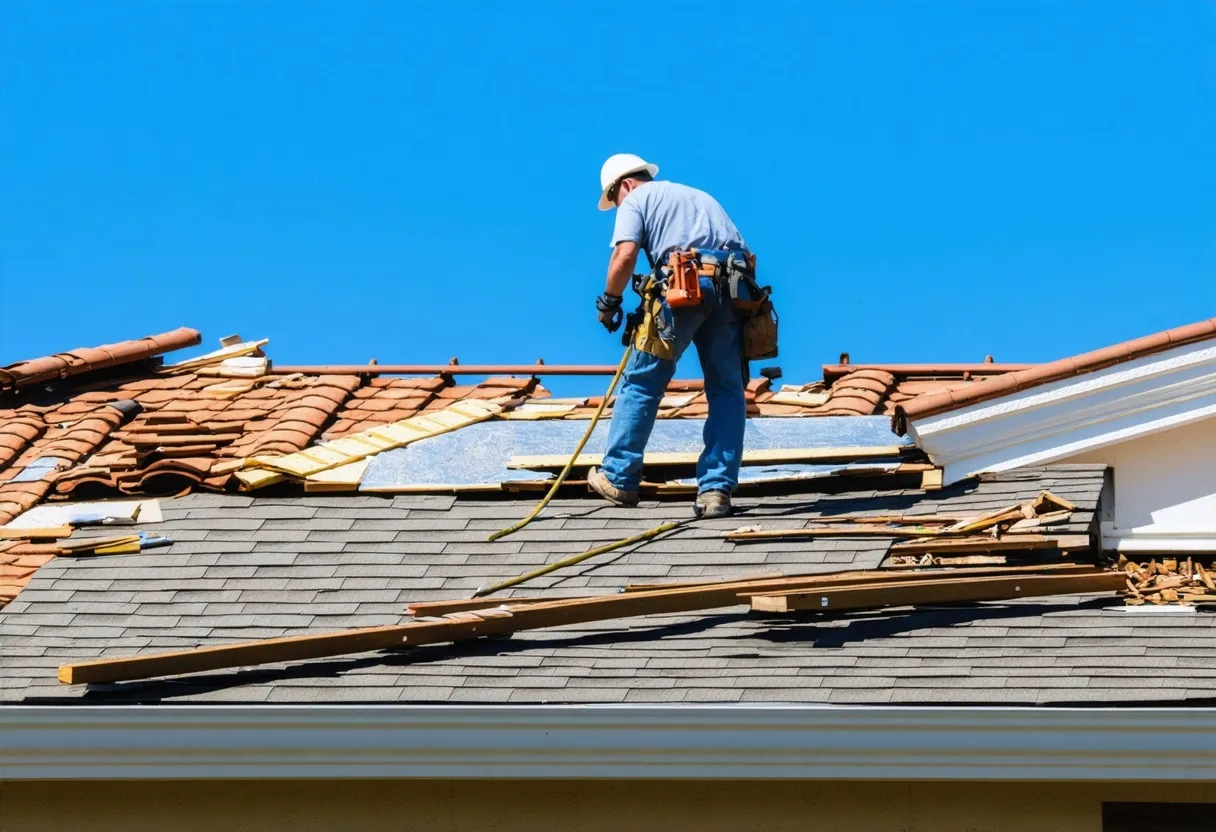
A West Valley monsoon cell doesn't announce itself. One minute the sky over the 85301 and 85308 zip codes is orange with blowing dust, the next it's dropping hail and gusts strong enough to peel tile off a roof near State Farm Stadium. Storm damage roof repair in Glendale, AZ is a different discipline than storm repair almost anywhere else in the country, because the roof that just took a direct hit spent the six months before that storm baking at surface temperatures well above 150°F. That heat load matters as much as the wind and hail themselves — it's what determines whether a roof shrugs off a storm or comes apart under it.
This page is built around that reality: how Arizona's heat-cycle stress sets a Glendale roof up to fail during monsoon season, what our repair process looks like once you call, what actually moves the price up or down, and how to keep an insurance claim from stalling on bad documentation. Pricing is discussed in plain terms throughout, and financing is covered directly rather than left for a phone call, because storm damage shouldn't come with a guessing game attached.
Heat First, Storm Second: Why Arizona Roofs Fail Differently
Most storm-damage guides talk about wind speed and hail size as if that's the whole story. In Glendale, it's only half of it. A roof that just spent a full Arizona summer expanding under surface temperatures well above 150°F is already carrying stress at every seam, fastener, and lap joint before a single raindrop falls. When a monsoon cell drops the surface temperature 30 to 40 degrees in the space of a few minutes, that thermal shock is what turns a roof that looked fine into one with cracked tile, split foam, or shingles that fail under hail impact a cooler-climate roof would have absorbed without a mark.
Tile takes the heat-cycle hit hardest
Concrete and clay tile dominate Glendale's newer subdivisions, and it's genuinely durable roofing when it's installed and maintained right. Storm damage to tile usually shows up as cracked or slipped pieces and broken hips and ridges after sustained wind gusts, but the tile itself is rarely the real problem — the underlayment beneath it is. A cracked tile over intact underlayment is cosmetic. The same crack over underlayment that's already brittle from months of heat cycling is an active leak waiting for the next storm to find it, which is why every disturbed tile gets checked underneath rather than just replaced on the surface.
Shingle and foam fail on a shorter timeline
Asphalt shingle loses granule adhesion faster under Arizona's UV exposure, so hail that would only dent a shingle in a milder climate can crack it clean through here. Wind tends to lift tabs along ridges and eaves first, and a creased shingle is a sign of wind stress even before it visibly tears. Flat and foam roofing, common on additions, patios, and older Glendale homes, takes the most direct hail impact of the three because there's no slope to deflect it, and foam that's already gone brittle from UV breakdown splits and punctures more readily than fresh material. Each of these three roofing types needs a different repair approach, and treating them the same is how a patch job turns into a repeat service call next monsoon season.
What Emergency Storm Response Covers in Glendale
Our Storm Repair Sequence, From Call to Final Walk-Through
Active leaks and exposed decking get scheduled ahead of cosmetic hail bruising, and tarping goes on first to stop water from reaching insulation and drywall.
Wind and hail rarely limit themselves to one spot, so flashing, valleys, vents, and gutters get checked along with the obviously damaged area, and everything gets logged in dated photos and measurements.
You get an itemized written estimate before anything starts, and if you're filing a claim we'll walk the roof with your adjuster so nothing gets missed or underscoped.
Repairs use material matched to your existing roof wherever possible, done in a single mobilization, and checked with a water test before the job is called finished.
What Actually Drives the Price of Storm Damage Roof Repair
Two Glendale homes hit by the same storm can get repair estimates that look nothing alike, and the gap usually comes down to five factors rather than anything arbitrary. Roofing material is the biggest one — tile repair takes more labor to re-set and color-match than shingle, and foam repair scales with the size of the compromised section rather than a flat per-roof rate. How far the damage actually reaches matters just as much: a surface-level crack costs far less to fix than one where water has already reached the underlayment or decking underneath, which is why damaged sections get opened up rather than assumed from the surface. Roof pitch and access add time and safety equipment on steep tile sections or multi-story homes near State Farm Stadium and elsewhere in Glendale's older neighborhoods. Material matching can add cost and lead time if your tile profile or shingle color has been discontinued and needs to be sourced from a specialty supplier rather than pulled off a shelf. And insurance coverage changes what you pay out of pocket directly — an approved claim often limits your cost to your deductible, while an uninsured repair is priced on materials and labor alone with nothing to offset it.
Itemized pricing, broken down by material and labor rather than handed over as a single lump number, comes before any work starts. Financing — including promotional 0% interest options for qualifying repairs — gets walked through during that same estimate visit if insurance isn't covering the full cost. That conversation happens up front, not after a crew is already on your roof and you're deciding under pressure.
Straight Answers Before You Sign Anything
You'll get a written, itemized estimate and a plain-language walk-through of financing options before any repair begins — no "we'll know once we're up there" pricing and no surprise gap between what insurance covers and what you owe.
Storm Damage Repair Questions Glendale Homeowners Ask
How do I know if hail actually damaged my tile roof?
Tile cracks under hail impact more often than it looks like from the ground, and the crack itself can look minor while the underlayment beneath it is already compromised. A ground-level look, or even a drone pass, isn't enough on its own — if you heard hail during a storm, a physical inspection of the tile and the underlayment beneath any disturbed pieces is the only reliable way to know.
Will Arizona homeowners insurance cover monsoon wind and hail damage?
Most Arizona policies cover wind and hail, but what actually determines approval is documentation — date-stamped photos taken before any tarping changes what's visible, a professional written scope of damage, and evidence tying the damage to a specific storm date rather than general wear and tear.
How fast can repair start after a monsoon hits Glendale?
Active leaks and exposed decking get scheduled ahead of cosmetic hail bruising. Emergency tarping to stop water intrusion is typically the fastest thing we can get on-site for, with the full repair scheduled once the roof has been inspected and priced.
What's the actual difference between tarping and a full repair?
Tarping is a temporary measure that buys time — it doesn't fix cracked tile, torn shingles, or split foam underneath it. Arizona's UV and heat load makes a tarp a short-term fix at best, so scheduling the full repair as soon as possible after stabilization matters more here than in a milder climate.
Do you offer financing if insurance doesn't cover the full repair?
Yes. Financing options, including promotional 0% interest offers for qualifying repairs, get covered during your estimate — before you're committed to a repair scope, not sprung on you afterward.
Can a roof have storm damage even without a visible leak yet?
Yes, and it's one of the more common ways a small problem turns expensive. Cracked tile underlayment, lifted shingle tabs, and hairline foam splits don't always show up as a ceiling stain right away — they show up weeks later, after enough rain has worked through. A post-storm inspection, even without an active leak, is what catches it early.
Where We Respond Across the Northwest Valley
Storm response centers on Glendale, including the 85301 and 85308 zip codes and the neighborhoods around State Farm Stadium, along with the broader Northwest Phoenix metro area and neighboring Peoria, AZ. Homes across this stretch of the West Valley share the same exposure profile — open terrain, limited tree cover, and a direct line to the storm cells that build over the desert and move through fast once monsoon season gets going.
Being local to that footprint changes two things in practice. First, scheduling an inspection doesn't mean a multi-day wait behind homes on the other side of the Valley when a major cell has just come through and every phone in the West Valley is ringing at once. Second, the crew that shows up already understands how heat-cycle stress behaves on the specific tile, shingle, and foam roofing common to Glendale and Peoria homes, rather than applying a general approach built for a climate that doesn't put a roof through 150°F days and monsoon downpours in the same week.
Get Your Upfront Quote
No pressure, no guesswork — just a clear price for your roof.
Ready for a Roof Built for Arizona?
Reach out for a straightforward, upfront quote.